
Greenworks Power Washer Instructions: A Comprehensive Guide

This guide provides detailed instructions for the Greenworks Pro Brushless 3000 PSI Electric Pressure Washer, ensuring effective outdoor cleaning and safe operation.
Understanding the auto on/off feature and GFCI protection is crucial, alongside diligent adherence to all safety precautions before each use.
Proper setup, operation, maintenance, and troubleshooting are covered, offering a comprehensive resource for maximizing your power washer’s performance and longevity.
Understanding Your Greenworks Power Washer
Your Greenworks power washer is a powerful cleaning tool designed for a variety of outdoor tasks, from washing vehicles to revitalizing decks and siding. It utilizes high-pressure water to effectively remove dirt, grime, and mildew.
Key to optimal performance is understanding its core functionality, particularly the auto on/off switch. This feature allows the pump to pressurize and enter standby mode, activating only when the trigger is engaged, conserving energy and extending pump life.
Familiarize yourself with the pressure settings and nozzle options, as these directly impact cleaning effectiveness and prevent potential damage to surfaces. The unit’s brushless motor contributes to increased efficiency and durability.
Always remember that GFCI protection is vital when connecting to an electrical source, safeguarding against electrical hazards. A comprehensive instruction manual accompanies your model, detailing specifications and ensuring safe, effective operation.
Safety Precautions & Warnings
Prior to operating your Greenworks power washer, carefully read and understand all safety rules and instructions. Failure to do so could result in serious injury. Always disconnect the power source before performing any maintenance or changing accessories.
Never point the wand at yourself or others, as the high-pressure stream can cause severe harm. Wear safety glasses or goggles to protect your eyes from debris. Be mindful of your surroundings and keep children and pets at a safe distance during operation.
Avoid spraying electrical components or outlets with the water stream. Ensure the GFCI outlet is functioning correctly before each use. Do not use the power washer to clean unpainted metal surfaces, as this could cause corrosion.

Inspect the high-pressure hose for any damage before each use, and never operate with a damaged hose. Be aware of potential trip hazards and maintain a stable footing while operating the machine.
Component Identification
Your Greenworks power washer consists of several key components working in unison. These include the main power washer unit housing the motor and pump, and the high-pressure hose connecting the unit to the spray gun. The spray gun features a trigger for controlling water flow and attachments for various nozzles.
Nozzles, crucial for adjusting spray patterns, are easily interchangeable. The water source connection allows attachment to a standard garden hose. A crucial safety feature is the GFCI (Ground Fault Circuit Interrupter) plug, protecting against electrical shock.
The auto on/off switch initiates operation when the trigger is depressed. Familiarize yourself with the location of the detergent tank (if equipped) and its corresponding intake valve. Inspect all connections before each use to ensure a secure fit and prevent leaks. Understanding each component’s function is vital for safe and effective operation.
Nozzle Selection & Usage
Greenworks power washers utilize interchangeable nozzles to achieve diverse cleaning results. Each nozzle dictates spray angle and pressure, impacting cleaning effectiveness. A wide-angle nozzle (typically 40 degrees) delivers low pressure, ideal for delicate surfaces like windows or painted siding, minimizing damage risk.
Narrow-angle nozzles (0, 15, 25 degrees) concentrate pressure for tackling stubborn grime on concrete, decks, or heavily soiled areas. Always start with a wider angle and gradually decrease it, testing on an inconspicuous area first.
Avoid using high-pressure nozzles on fragile materials. Ensure the nozzle is securely attached before operation. Incorrect nozzle selection can lead to surface damage or reduced cleaning performance. Regularly inspect nozzles for clogs and clean them as needed to maintain optimal spray patterns.
High-Pressure Hose Connection
Securely connecting the high-pressure hose is paramount for safe and effective operation of your Greenworks power washer. Begin by ensuring the power washer is switched off and unplugged. Locate the hose connection points – one on the pump and another on the spray gun.
Hand-tighten the hose fittings onto both connections, ensuring a snug fit. Avoid using tools for tightening, as this can damage the fittings. Inspect the hose for any kinks, cuts, or abrasions before connecting. A damaged hose can burst under pressure, posing a safety hazard.
Double-check that both connections are secure before turning on the water supply. A loose connection can result in water leakage and reduced pressure. Never point the spray gun or hose at yourself or others during connection or operation. Regularly inspect the hose and fittings for wear and tear.
Initial Setup & Preparation
Before operating your Greenworks power washer, thorough initial setup is crucial for optimal performance and longevity. Begin by carefully unpacking all components and verifying that everything listed in the manual is present. Inspect the unit for any shipping damage; if damage is found, contact Greenworks customer support immediately.
Choose a suitable location for operation – a flat, stable surface near a GFCI-protected electrical outlet and a water source. Ensure the area is free from obstructions and that the spray will not impact people, pets, or fragile items. Familiarize yourself with the auto on/off switch and its functionality before proceeding.
Prepare to connect the water source and electrical connection, following the specific instructions detailed in the subsequent sections. Always read all safety rules and instructions before beginning the setup process to ensure a safe and efficient cleaning experience.
Water Source Connection
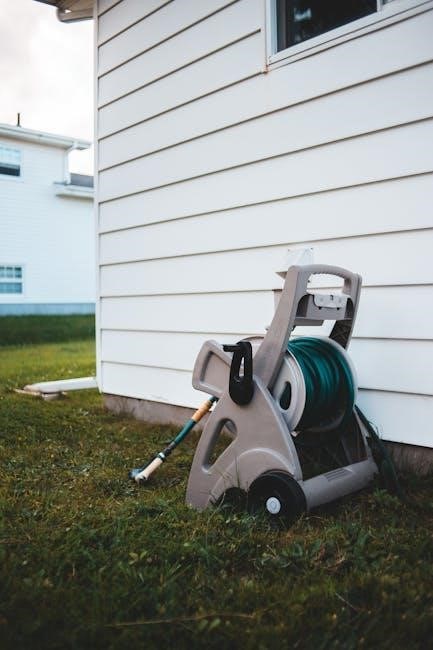
Connecting a water source is a vital step in preparing your Greenworks power washer for operation. Ensure you have a standard garden hose, free from kinks or damage, readily available. Attach the water inlet adapter securely to the power washer’s water inlet port, typically located near the base of the unit.
Connect the garden hose to the water inlet adapter, tightening the connection firmly to prevent leaks. Before turning on the water supply, fully open the water faucet. This allows air to escape the hose and ensures consistent water flow to the pump. Check for any leaks around the connections and tighten as needed.
Insufficient water supply can damage the pump, so maintaining a steady flow is essential. Never draw water from stagnant sources or use water that contains debris, as this can clog the system.
Electrical Connection & GFCI Protection
Proper electrical connection is paramount for safe operation of your Greenworks power washer. Ensure your outlet is adequately grounded and matches the voltage requirements specified on the power washer’s nameplate. Always use a Ground Fault Circuit Interrupter (GFCI) outlet or a GFCI extension cord.
GFCI protection is crucial as it quickly cuts off power in the event of a ground fault, minimizing the risk of electric shock. Note that GFCI plugs do not protect against short circuits or overloads. Before each use, press the reset button on the GFCI outlet or extension cord to verify its functionality.
Avoid using extension cords whenever possible; if necessary, use a heavy-duty, outdoor-rated cord of the correct gauge and length. Inspect the power cord regularly for damage and never operate the power washer with a frayed or damaged cord.

Operating Instructions: Step-by-Step
Begin by ensuring the water source is connected and the power washer is plugged into a GFCI-protected outlet. Turn the power switch to the “On” (I) position; the pump will pressurize and then shut down automatically. This indicates the auto on/off feature is active and the unit is in standby mode.
To initiate operation, depress the trigger on the spray gun. The motor will engage, and high-pressure water will flow. Release the trigger, and the motor will automatically shut off, returning the unit to standby. Adjust the pressure settings as needed for the cleaning task at hand.
Always maintain a firm grip on the spray gun and nozzle during operation. Start with a low-pressure setting and gradually increase it as required, testing on an inconspicuous area first. Be mindful of your surroundings and avoid spraying electrical components or people.
Powering On & Auto On/Off Function
The Greenworks power washer features a convenient auto start/stop system for efficient operation. Initially, switch the power to “On” (I); the pump will briefly pressurize and then enter standby, awaiting trigger activation. This immediate shutdown conserves energy and reduces wear on the motor.
Operation begins solely when the trigger on the spray gun is depressed. The unit will instantly power on, delivering high-pressure water; Releasing the trigger immediately halts the water flow and shuts off the motor, returning to standby. This eliminates the need for repeated on/off switching.
This auto function enhances usability and extends the lifespan of the power washer. Ensure the GFCI outlet is functioning correctly for safe operation. Familiarize yourself with this feature before commencing any cleaning tasks.
Adjusting Pressure Settings
Greenworks power washers offer adjustable pressure, crucial for tackling diverse cleaning tasks without causing damage. Pressure is primarily controlled through nozzle selection, as detailed in the nozzle application guide. However, some models may include a pressure regulator dial or knob.
If equipped, this regulator allows for fine-tuning the water pressure. Turning the dial clockwise generally increases pressure, while counterclockwise decreases it. Always start with the lowest pressure setting and gradually increase it until the desired cleaning power is achieved.
Exercise caution when adjusting pressure, especially on delicate surfaces. Incorrect pressure can lead to etching, stripping paint, or other forms of damage. Regularly test the pressure on an inconspicuous area before proceeding with the entire cleaning project.

Nozzle Application Guide
Selecting the correct nozzle is paramount for effective and safe cleaning with your Greenworks power washer. Nozzles determine the spray pattern and, consequently, the pressure delivered to the surface. Different nozzles are designed for specific cleaning applications.
Understanding the color-coding system is essential. Generally, wider-angle nozzles (often white or green) deliver lower pressure, ideal for delicate surfaces like windows or vehicles. Narrower-angle nozzles (typically red or yellow) concentrate the spray, providing higher pressure for stubborn dirt and grime on concrete or brick.
Always refer to the specific nozzle chart included with your Greenworks model. Experiment with different nozzles on an inconspicuous area to determine the optimal setting for your cleaning task. Incorrect nozzle selection can damage surfaces or reduce cleaning efficiency.
Wide-Angle Nozzle (Low Pressure)
The wide-angle nozzle, typically white or green, delivers a fan-shaped spray with lower pressure. This makes it ideal for delicate cleaning tasks where a forceful blast could cause damage. Consider using this nozzle for washing vehicles, applying soap, rinsing siding, or cleaning windows.
Its broader spray pattern covers a larger area quickly, making it efficient for general surface cleaning. However, it may require more time to remove stubborn dirt or grime. Maintain a safe distance of approximately 12-18 inches from the surface to prevent streaking or water intrusion.
Always test the nozzle on an inconspicuous area first to ensure it doesn’t harm the material. Adjust the nozzle’s rotation to modify the spray width, tailoring it to the specific cleaning need. This nozzle minimizes the risk of etching or damaging sensitive surfaces.

Narrow-Angle Nozzle (High Pressure)
The narrow-angle nozzle, often red or yellow, concentrates the water pressure into a powerful, pinpoint stream. This is best suited for tackling tough, ingrained dirt and grime on durable surfaces like concrete, brick, and heavily soiled patios. Exercise extreme caution when using this nozzle, as it can easily damage softer materials.
Maintain a greater distance – typically 8-12 inches – from the cleaning surface to avoid etching or causing damage. Start with a wider spray pattern and gradually narrow it as needed, observing the effect on the surface. Avoid prolonged exposure to a single spot, as this can lead to surface erosion.
This nozzle is excellent for removing stubborn stains, mildew, and loose paint. Always wear appropriate safety gear, including eye protection, when operating with high-pressure nozzles. Remember, higher pressure equals greater cleaning power, but also increased risk of damage.
Maintenance & Storage
Regular maintenance is crucial for extending the life and maintaining the performance of your Greenworks power washer. After each use, thoroughly flush the system with clean water to remove any remaining detergent or debris. This prevents clogging and corrosion within the pump and hoses.

Inspect the high-pressure hose for any signs of wear, cracks, or leaks. Check the nozzles for blockage and clean them as needed. Store the power washer in a dry, frost-free location to prevent damage during colder months. Before long-term storage, winterizing is essential.
Winterizing involves completely draining all water from the pump, hoses, and wand. Consider using a pump saver solution to lubricate internal components and protect against freezing. Proper storage ensures your power washer is ready for efficient operation when you need it next season.
Cleaning & Flushing the System
Post-use flushing is paramount for maintaining your Greenworks power washer’s longevity and optimal performance. Disconnect the water supply and briefly run the unit without a nozzle attached, allowing it to expel any remaining detergent or debris from the pump and hose.

This process prevents buildup that can lead to clogs and corrosion, significantly impacting the machine’s efficiency. Consider using a dedicated pump cleaner periodically for a more thorough internal cleanse, following the product’s instructions carefully.
Inspect the nozzles regularly and remove any obstructions with a fine wire or nozzle cleaning tool. Wipe down the exterior of the power washer with a damp cloth to remove dirt and grime. Consistent cleaning ensures reliable operation and extends the lifespan of your investment.
Winterizing Your Power Washer
Proper winterization is crucial to prevent freeze damage to your Greenworks power washer. Begin by disconnecting the water supply and thoroughly flushing the pump and hose to remove all water and detergent residue, as detailed in the cleaning section.
Disconnect the high-pressure hose and store it in a frost-free location. If possible, use a pump protector specifically designed for pressure washers; this will lubricate internal components and prevent corrosion during storage. Empty the detergent tank completely to avoid freezing and potential cracking.
Store the power washer indoors in a dry, protected area, away from extreme temperatures. Ensure all connections are dry before storage. Following these steps will safeguard your investment and ensure it’s ready for use when warmer weather returns.
Troubleshooting Common Issues
If your Greenworks power washer fails to start, first verify the GFCI outlet is functioning correctly and the power switch is in the “On” (I) position. Remember the auto on/off feature – the unit won’t run without the trigger depressed. Check for obstructions in the water inlet or high-pressure hose.
Low pressure output can often be resolved by checking the nozzle for clogs or selecting a narrower-angle nozzle. Ensure a sufficient water supply is connected to the pump. If the unit shuts off unexpectedly, it may be due to overheating; allow it to cool down before restarting.

For persistent issues, consult the full instruction manual or Greenworks’ customer support. Regular maintenance, including flushing the system, can prevent many common problems and extend the life of your power washer.